Appearance
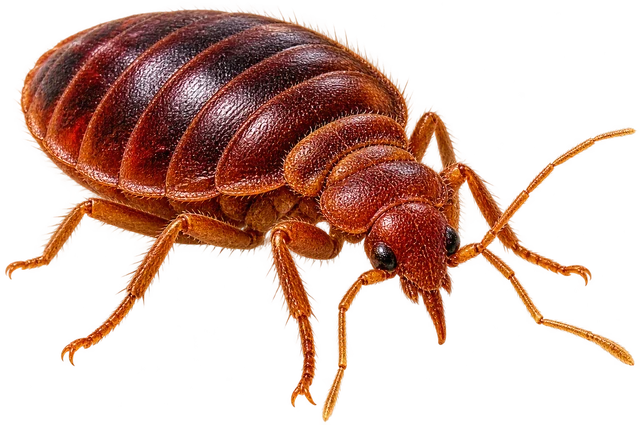
4 to 7 mm, reddish-brown, with a flattened body that swells after a blood meal. The eggs, tiny and white (1 mm), are glued into cracks.
Bed bugs never come alone, and they shrug off store-bought products. Our professional protocol — inspection, guided preparation, treatment, and verification — gets rid of them for good, with complete discretion.
Hotels, transit, used furniture, apartment buildings: anyone can bring them home. What matters is acting quickly and correctly.
Reddish-brown, flat, and oval — about the size of an apple seed. It hides during the day in mattress seams, box springs, headboards, baseboards, and outlets, and comes out at night to feed.
4 to 7 mm, reddish-brown, with a flattened body that swells after a blood meal. The eggs, tiny and white (1 mm), are glued into cracks.
Mattress seams, box spring, headboard, frame, baseboards, curtains, outlets: anywhere near where you sleep.
Drawn to warmth and CO₂, it bites at night, often in a line or cluster, then retreats to hide.
Luggage, used furniture, clothing, laundromats, public transit: it hitchhikes to get around.
A female lays 2 to 5 eggs a day. From egg to adult in 5 to 8 weeks under good conditions.
It survives months without feeding and resists many household insecticides — which is why DIY treatments fail.
Bites cause itching and skin reactions in many people, and infestations often bring anxiety and lost sleep. It's not hopeless: with a rigorous protocol and a bit of patience, they can be eliminated completely.
The worst mistake is improvising: insecticide bombs, moving furniture from room to room, or sleeping on the couch all spread the infestation through the entire unit. Follow the technician's instructions — they're an essential part of the treatment.
A structured protocol where every step counts, including your guided preparation — it's key to success.
Confirming presence, assessing the extent, and identifying every affected area.
A clear preparation checklist: bedding, clothing, decluttering. We guide you through every step.
Treating resting areas and hiding spots with registered products, in one or more visits depending on the protocol.
A follow-up visit to confirm complete elimination, including eggs hatched between visits.
Most infestations require at least two visits, about two weeks apart, to eliminate bugs that hatch between treatments. The exact protocol depends on how extensive the infestation is.
Rarely. In most cases, the mattress can be treated and protected with a certified bed bug-proof cover. Discarding an infested mattress without precautions can actually spread the problem through the building.
No disease transmission to humans has been demonstrated. The main issues are skin reactions, insomnia, and anxiety — and they're reason enough to seek prompt treatment.
Inspect the bed on arrival (mattress seams, headboard), keep your suitcase closed and elevated, and on your return, wash worn clothing in hot water and dry on a hot cycle before putting it away.
Completely. Unmarked vehicles, a discreet technician, and no indication of what the visit is for. Your neighbours won't know a thing.
The sooner you act, the shorter the treatment. A discreet professional protocol, from inspection to final verification.