Colony structure
Depending on the species: a single queen (carpenter) or dozens (pharaoh). This difference completely changes the treatment strategy.
Not all ants are treated the same way. Identifying the species — carpenter, pharaoh, or common — is the first step toward an effective, lasting treatment.
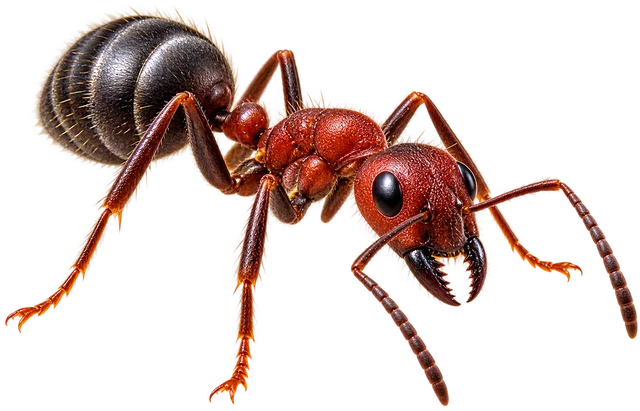
The wrong treatment can split a pharaoh ant colony into several colonies. Professional identification avoids that trap.
Size and appearance to scale, to help identify the species in your home.
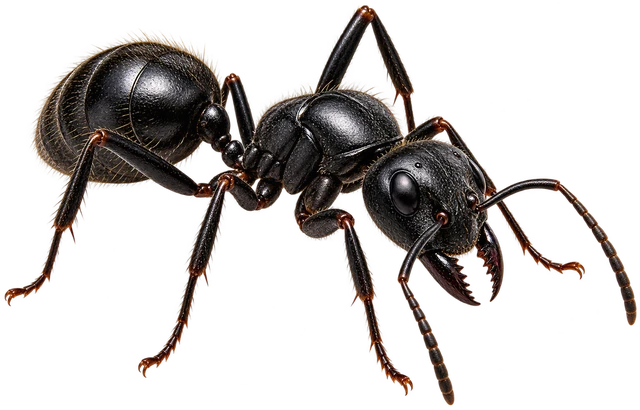
Large black ant, sometimes black and red. Digs smooth galleries in damp wood — a structural risk over time.
Dark brown. Nests under slabs, pavers, and foundations; comes indoors in spring in search of food.
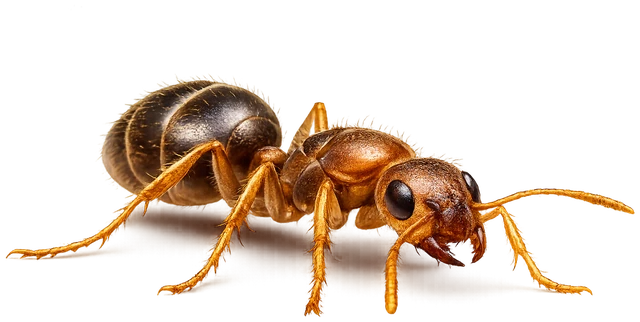
Amber-yellow, barely visible. Multi-queen colonies in heated walls — never treat with aerosol spray.
Regardless of the species involved, a few shared behaviours explain why a poorly targeted treatment fails: colony structure, what attracts the workers, and seasonal cycles.
Depending on the species: a single queen (carpenter) or dozens (pharaoh). This difference completely changes the treatment strategy.
Sugars, fats, proteins, water. Pheromone trails guide workers to the sources they find.
Peak activity from spring through fall. Ants active indoors in winter almost always signal a nest inside the building.
Each species calls for a different approach. Baits effective against pharaoh ants differ from those used against carpenter ants; and an aerosol insecticide applied in the wrong spot can split a pharaoh colony into several colonies (a process called budding), or temporarily mask carpenter ant activity that continues to hollow out the structure.
Our technician identifies the species, locates the nest or nests, and chooses the appropriate method. See also our detailed pages: carpenter ants and pharaoh ants.
The strategy depends on the species identified, where the nests are located, and the building's layout.
Confirming the species involved — the foundation of any effective treatment.
Finding the main nest and any satellite nests, indoors and out.
Baits, perimeter treatment, or direct application depending on species and location.
Correcting favourable conditions (damp wood, access points, vegetation) and checking results.
Size is the first clue: carpenter ants measure 6 to 25 mm, noticeably bigger than common ants (2-4 mm). Their thorax is evenly rounded when viewed from the side. If in doubt, send us a photo — identification is free.
Not always. In spring and summer, workers may come in from outside to forage. But constant activity, especially in winter, usually points to a nest inside the building.
These home remedies temporarily mask pheromone trails but don't eliminate the colony. As long as the nest and its queen or queens are active, the ants will keep coming back.
As soon as activity is regular indoors, you notice sawdust, or you spot very small ants near heating baseboards. The earlier the nest is treated, the simpler the treatment.
Send us a photo or describe the situation: we'll identify the species and recommend the right treatment at the right price.