Tiny
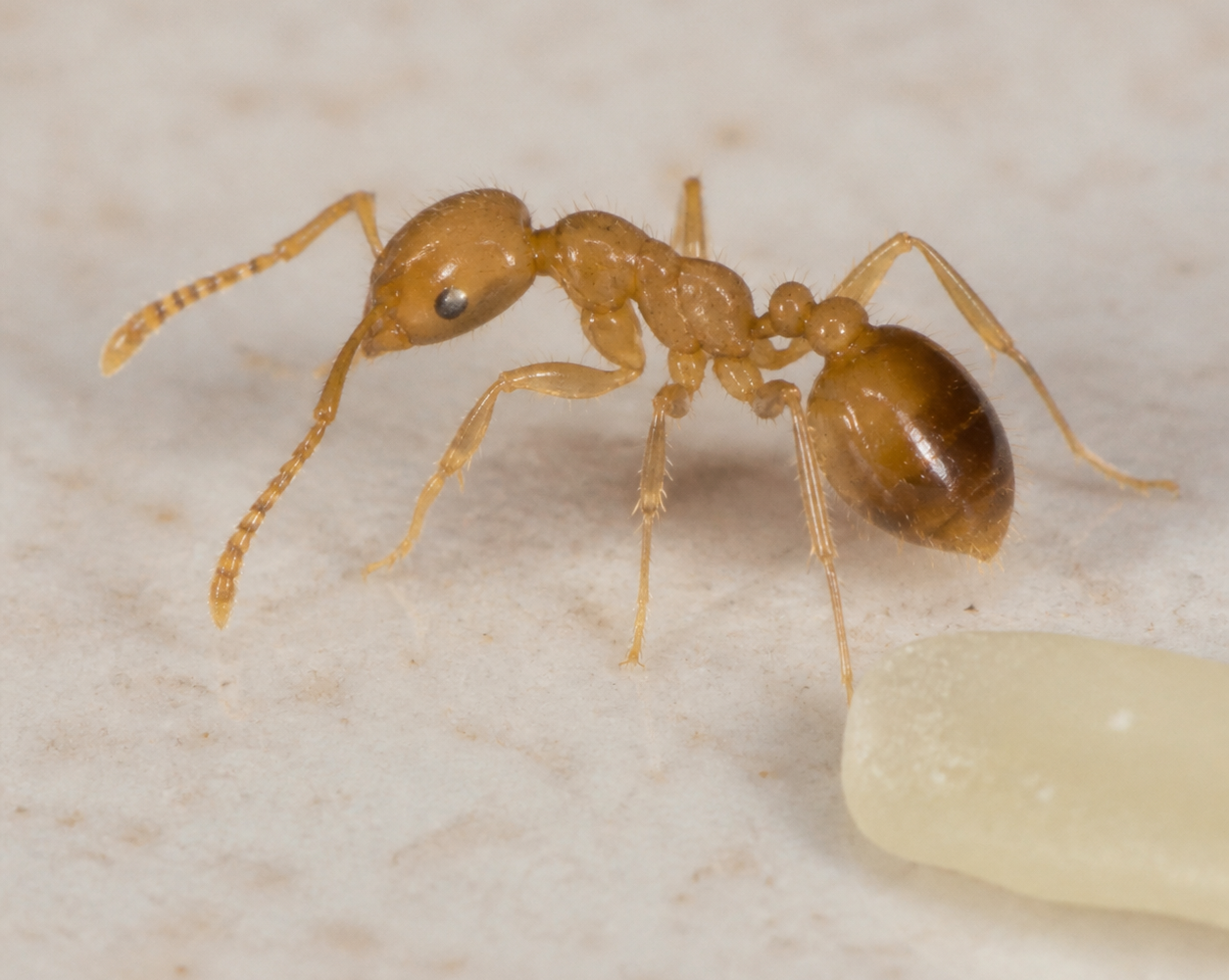
About 2 mm, translucent amber-yellow. Easy to mistake for just “small ants” — exact identification changes the whole treatment.
Tiny but formidable: the pharaoh ant forms multi-queen colonies inside heated walls, and aerosol insecticides make the problem worse. Specialized bait treatment is the only lasting approach.
Under insecticide stress, the colony splits into several new colonies (budding). It's the classic trap of DIY treatments.
Amber-yellow to light brown, barely 2 mm long: it's often spotted in a trail near heating baseboards, hot water pipes, the kitchen, or the bathroom — summer and winter alike.
About 2 mm, translucent amber-yellow. Easy to mistake for just “small ants” — exact identification changes the whole treatment.
It can't survive a Quebec winter outdoors: it lives exclusively inside heated buildings, active 12 months a year.
Unlike most ants, each colony has many queens — killing a few workers has no lasting effect.
Drawn to protein and sugar, it can contaminate food and surfaces; a serious issue in kitchens, daycares, and healthcare facilities.
Through pipes and utility voids, a colony can spread to several units. Coordinating with neighbours speeds up elimination.
It follows pipes, wires, and heating baseboards. Trails are sometimes visible only at certain times of day.


When a pharaoh ant colony is stressed by a sprayed insecticide, it responds by budding: queens leave the nest with workers and brood to found new colonies elsewhere in the building. The result is a multiplied problem instead of a solved one.
Effective treatment relies on specialized baits that workers carry back to the nest and share with the queens and brood. It's slower — a few weeks — but it's the only approach that actually eliminates the colonies.
A rigorous baiting protocol, no spraying, with follow-up until all activity is gone.
Identification under magnification if needed — the entire strategy depends on it.
Tracking trails, hot zones, and affected units in multi-unit buildings.
Placing professional baits along active trails, refreshed based on consumption.
Control visits and bait adjustments until the colonies are eliminated.
Generally 4 to 8 weeks depending on how extensive the colonies are. The bait must be consumed and shared within the nests to reach the queens — an effective but gradual process.
Because the colony responds by splitting (budding): you multiply the nests instead of eliminating them. It's the main reason DIY treatments fail against this species.
In apartment buildings, it's strongly recommended: colonies travel through pipes and utility voids. A coordinated treatment is faster and more lasting for everyone.
Leave the baits in place, avoid any household insecticide, and limit access to food sources (crumbs, dishes, pet food). The technician will give you precise instructions.
Pharaoh ants don't disappear on their own. Specialized baiting protocol with follow-up until they're fully eliminated.